
Executing a meticulous Georgia business name search is the primary foundational step for entrepreneurs, corporate attorneys, and expanding commercial enterprises preparing to launch a new entity in Georgia. Regulated under O.C.G.A. Title 14 by the Secretary of State Corporations Division, Georgia statutes dictate that every corporate moniker must be legally distinguishable from all existing domestic entities, authorized foreign corporations, reserved names, and registered state trademarks. Conducting an exhaustive name availability examination prevents costly administrative rejections, protects branding investments, and establishes legal clarity from day one.
Beyond basic state entity lookups, navigating corporate naming conventions requires an appreciation of statutory designator mandates, restricted terminology guidelines, and local county trade name recording rules. Because an approved entity name does not confer proprietary intellectual property rights, comprehensive due diligence must also encompass state and federal trademark registries. Thorough investigative protocols safeguard commercial founders against trademark infringement disputes, ensure seamless Secretary of State charter approvals, and protect organizational reputation across regional markets.
Statutory Distinguishability Standards in Georgia
Under Georgia corporate law, the Secretary of State will reject any proposed business name that is identical to or deceptively similar to an existing registered entity. The legal doctrine of distinguishability ensures that consumers and contracting parties can clearly identify separate legal enterprises.
The Corporations Division does not consider minor punctuation variations, font cases, or corporate entity suffixes (such as LLC versus Inc.) as creating legal distinguishability. The substantive root of the name must be distinct on public records.
To ensure robust brand protection beyond basic entity formation, business founders should execute a comprehensive Trademark Search to detect conflicting registered state and federal marks.
Executing an Effective Name Availability Search
Performing a business name availability inquiry requires navigating the Secretary of State eCorp database. Utilizing refined search methodologies ensures that conflicting entities are detected prior to filing formal organizational paperwork.
| Entity Structure | Permitted Statutory Designators | Prohibited Suffixes | Governing Georgia Code |
|---|---|---|---|
| Limited Liability Company | LLC, L.L.C., Limited Liability Company | Inc., Corp., Incorporated | O.C.G.A. § 14-11-207 |
| Business Corporation | Corporation, Company, Incorporated, Limited, Corp., Inc., Co., Ltd. | LLC, Limited Liability Company | O.C.G.A. § 14-2-401 |
| Professional Corporation | P.C., Professional Corporation | LLC, Company, Co. | O.C.G.A. § 14-7-1 et seq. |
| Limited Partnership | LP, L.P., Limited Partnership | LLC, Inc., Corporation | O.C.G.A. § 14-9-102 |
Search Methodologies on eCorp
To conduct a thorough availability search, test multiple query variations across three core search parameters:
- Starts With Search: Tests whether another entity begins with the identical word combination.
- Contains Search: Uncovers existing businesses containing your core distinctive keywords anywhere in their registered name.
- Exact Match Search: Verifies whether the precise title is already claimed by an active or inactive entity.
Statutory Corporate Designator Requirements
Georgia law mandates that business names include an appropriate statutory identifier designating the underlying entity classification. Limited liability companies must include designators such as “Limited Liability Company”, “LLC”, or “L.L.C.” Corporations must include words or abbreviations like “Corporation”, “Incorporated”, “Inc.”, or “Corp.”
| Restricted Term Category | Restricted Keywords | Approving Regulatory Agency | Prerequisite Approval |
|---|---|---|---|
| Banking & Financial Services | Bank, Banker, Banking, Trust, Credit Union | Department of Banking and Finance | Written Letter of Approval |
| Insurance & Assurance | Insurance, Assurance, Surety, Indemnity | Office of Insurance and Safety Fire Commissioner | Written Agency Clearance |
| Higher Education | College, University, School of Law | Nonpublic Postsecondary Education Commission | State Educational Accreditation |
| Engineering & Architecture | Architect, Architecture, Professional Engineer | Georgia Professional Licensing Board | Active Professional Licensure |
Restricted and Prohibited Business Terminology
Georgia corporate statutes restrict specific terms that might mislead the public regarding the nature of the business or imply affiliation with governmental authorities. Terms associated with banking, insurance, education, and licensed professions require formal written approval from relevant state supervisory boards before the Secretary of State will accept formation filings.
If an enterprise plans to operate under a secondary marketing name distinct from its registered charter name, it must file a Georgia DBA with the appropriate county clerk of superior court.
Statutory Name Reservation Protocols
Entrepreneurs who have cleared a distinctive business name but are not yet ready to file formation articles can secure the name through an official reservation. The Secretary of State allows individuals to reserve an available business name for a non-renewable period of thirty days upon payment of a $25 filing fee.
Once name availability is verified and secured, founders can confidently proceed with their official Business Registration through the online eCorp system.
Statutory Distinguishability Regulations and Administrative Rejection Grounds
The Georgia Secretary of State Corporations Division enforces strict name distinguishability standards under O.C.G.A. § 14-2-401 and § 14-11-207. A proposed business name must be distinguishable upon the records of the Secretary of State from all currently registered, reserved, or active commercial names.
Administrative regulations establish that minor variations in punctuation, capitalization differences, grammatical articles (such as “The” or “A”), and standard corporate designators do not create statutory distinguishability. Reviewing these administrative criteria prevents filing delays and application fee losses.
- Ignored Corporate Terms: Words like “Company”, “Limited”, “Incorporated”, and “LLC” are omitted during distinguishability tests.
- Restricted Financial Keywords: Words including “Bank”, “Trust”, and “Credit Union” require formal Department of Banking approval.
- Academic Designators: Using “University” or “College” requires explicit authorization from state educational authorities.
- Professional Licensure Rules: Terms like “Engineering”, “Legal”, or “Medical” require proof of professional state licensure.
Complying with statutory naming guidelines ensures seamless charter processing and protects your organizational brand from administrative rejection in Georgia.
Name Reservation Protocols and Comprehensive Intellectual Property Protection
Entrepreneurs preparing to register a Georgia enterprise can secure their preferred business name by submitting an official Name Reservation application through the eCorp portal. Under O.C.G.A. § 14-2-402, an approved reservation grants exclusive rights to the name for thirty calendar days.
However, securing a state corporate name reservation does not grant trademark ownership or shield against federal trademark infringement claims. Prudent incorporators conduct comprehensive trademark clearance across both state and federal registries prior to launching commercial branding.
- 30-Day Filing Window: Incorporators must submit formal charter articles before the 30-day reservation window expires.
- Reservation Number Requirement: The state reservation tracking number must be entered accurately during formation filing.
- USPTO Database Clearance: Reviewing federal trademark registers prevents conflicts with existing national brand owners.
- Common Law Commercial Checks: Inspecting local trade directories ensures no prior commercial use conflicts exist.
Pairing state name reservation with thorough intellectual property auditing guarantees secure branding and minimizes trademark litigation risks in Georgia.
Linguistic and Phonetic Distinguishability Standards
The legal availability of a proposed business name in the State of Georgia is determined according to rigorous statutory distinguishability standards established under O.C.G.A. § 14-2-401 and § 14-11-207. The Secretary of State Corporations Division does not evaluate whether a name sounds appealing or creative; rather, regulatory examiners review whether a proposed name is legally distinguishable upon the public records from any existing active domestic or foreign entity name, reserved name, or registered trade name.
Under statutory guidelines, minor mechanical differences are legally insufficient to create distinguishability. For example, simply altering punctuation, adding or removing articles such as “the,” “a,” or “an,” or changing spacing between words will not render a name acceptable if the underlying root words are identical to an existing entity. Similarly, merely substituting corporate designators—such as attempting to register “Peachtree Logistics Corporation” when “Peachtree Logistics LLC” is already registered—will result in mandatory rejection by state examiners.
Furthermore, state reviewers assess phonetic similarity and transliterated terms. If a proposed name creates an undeniable risk of public confusion with an established enterprise in the same commercial sphere, the application will be denied to protect market integrity and prevent consumer deception.
- ✔Statutory Designator Changes: Swapping “Inc,” “LLC,” “Corp,” or “Limited” does not establish legal distinguishability under Georgia law.
- ✔Punctuation and Spacing Rules: Disregarding periods, hyphens, commas, and internal word spaces during official database deduplication.
- ✔Grammatical Articles: Disregarding leading or trailing words like “The”, “A”, or “And” when comparing proposed names against the active registry.
- ✔Restricted Term Cross-Checks: Screening out protected professional terms that mandate prior licensing board clearance before charter approval.
Restricted Words and Statutory Licensing Clearances
In addition to distinguishability requirements, Georgia law explicitly restricts the unauthorized use of specific commercial and professional terms within business entity names. Incorporators cannot include words implying professional licensure, governmental affiliation, or regulated financial activities without submitting verified authorization letters from relevant state oversight agencies.
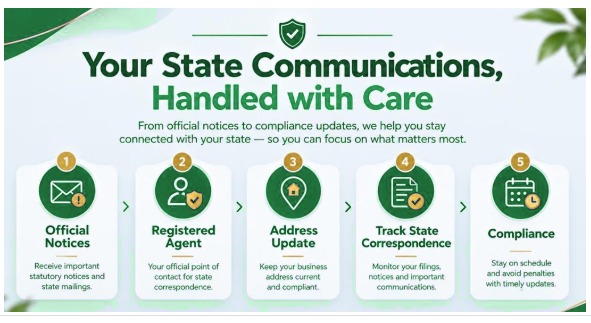
For instance, utilizing terms such as “Bank,” “Bancorp,” “Trust,” or “Credit Union” requires formal written clearance from the Georgia Department of Banking and Finance under O.C.G.A. § 7-1-243. Similarly, utilizing professional terms such as “Engineer,” “Architecture,” “Certified Public Accountant,” or “Medical Clinic” requires proof that primary organizers hold active professional credentials with their respective state licensing boards. Submitting formation documents containing restricted words without necessary clearance certificates results in immediate filing rejection.
Prospective business founders must review the Secretary of State restricted terms index during the planning stage to ensure their chosen corporate identity complies with all inter-agency regulatory mandates.
Strategic Entity Branding vs State Name Reservation
Entrepreneurs frequently conflate registering a corporate name with the Secretary of State with securing proprietary trademark rights. It is essential to recognize that registering a business name with the Corporations Division merely grants the entity the statutory right to exist and transact commerce under that corporate umbrella in Georgia; it does not confer exclusive intellectual property ownership or shield against federal trademark infringement claims.
If an enterprise plans to brand consumer products, build nationwide digital recognition, or distribute branded merchandise, it must conduct extensive trademark clearance across the United States Patent and Trademark Office (USPTO) database in conjunction with the state registry search. Operating under an approved state corporate name can still trigger devastating trademark infringement litigation if a preexisting commercial user owns superior common law or federal rights to that mark.
Prior to expending substantial capital on vehicle wraps, building signage, and web branding, business owners should formally reserve their desired name through the eCorp 30-day reservation protocol while their intellectual property counsel conducts complete commercial clearance audits.
Navigating Digital Brand Alignment and Trademark Clearance
In modern enterprise development, establishing a commercial identity in Georgia extends far beyond clearing statutory distinguishability rules on the Secretary of State eCorp database. Prospective business founders must orchestrate a synchronized clearance process across digital channels, domain registries, and intellectual property repositories.
A corporate name that is completely available for registration on the state corporate database may already be heavily utilized as a commercial domain name, an active social media handle, or an established federal trademark. Launching a venture without conducting concurrent digital asset searches can lead to severe marketing friction, brand dilution, and unexpected cease-and-desist demands from preexisting commercial users who hold prior common law trademark rights under federal law.
To establish an enduring brand footprint, founders should simultaneously verify corporate name availability on eCorp, check corresponding top-level domain availability (.com), screen federal trademarks on the USPTO TESS search system, and verify key social media handles. Securing harmony across all commercial identifiers ensures uninterrupted commercial growth and prevents costly post-launch rebranding expenses.
Frequently Asked Questions
Review statutory name availability rules, distinguishable name criteria, and trade name reservation protocols under Title 14 of the Georgia Code. Our naming specialists explain SOS preliminary searches, restricted corporate designators, and trademark clearance.
How does the Georgia Secretary of State determine if a name is distinguishable?
The Georgia Secretary of State evaluates name distinguishability by comparing the substantive wording of the proposed moniker against active entities, authorized foreign corporations, and reserved names on file. Differences in corporate suffixes such as Inc or LLC, minor punctuation, articles like The, and spacing variations do not create legal distinguishability under O.C.G.A. Title 14. The substantive name must contain distinct phonetic and semantic elements to prevent consumer deception and administrative confusion.
How long can I reserve a business name in Georgia before forming my company?
Under Georgia corporate statutes, a business name reservation remains valid for exactly thirty calendar days from the date of state approval. The reservation fee is $25 for online submissions through eCorp. The reservation is non-renewable, meaning founders must either submit formal formation documents within the thirty-day window or permit the reservation to expire before submitting a new reservation request.
Can I use a business name in Georgia that is registered in another state?
Registering a business name in another state grants zero legal rights or name protection within Georgia. If another enterprise has already registered or reserved that name with the Georgia Secretary of State, your formation filing will be rejected unless the conflicting entity consents in writing or your company qualifies as a foreign entity under an acceptable fictitious name approved by the Corporations Division.
What words require special state authorization in a Georgia corporate name?
Under Georgia corporate law, specific commercial terms that imply regulated activities or governmental authority are strictly restricted and cannot be included in a business name without advance administrative clearance. Monikers incorporating banking keywords such as bank, banking, banker, trust, or credit union require formal written authorization from the Georgia Department of Banking and Finance before Articles can be accepted. Similarly, insurance terms require approval from the Office of Insurance and Safety Fire Commissioner, while educational titles such as college, university, or academy necessitate written approval from the Nonpublic Postsecondary Education Commission. Utilizing licensed engineering or architectural designations also mandates verification of active professional state credentials.
Does registering a business name protect my brand from federal trademark infringement?
No. Registering a corporate entity moniker with the Georgia Secretary of State satisfies statutory charter requirements under Title 14 but does not convey proprietary intellectual property rights or federal trademark protection. A third-party enterprise holding a senior trademark registration with the United States Patent and Trademark Office (USPTO) or common law rights in your geographic trading area can legally demand that you cease utilizing the commercial moniker, initiate federal trademark infringement litigation, and compel your business to rebrand. To secure comprehensive brand exclusivity and minimize civil liability, entrepreneurs must perform nationwide federal trademark searches through the USPTO registry in addition to state business availability reviews.